
Want to Work In Scrap Metal? My Career Day Presentation
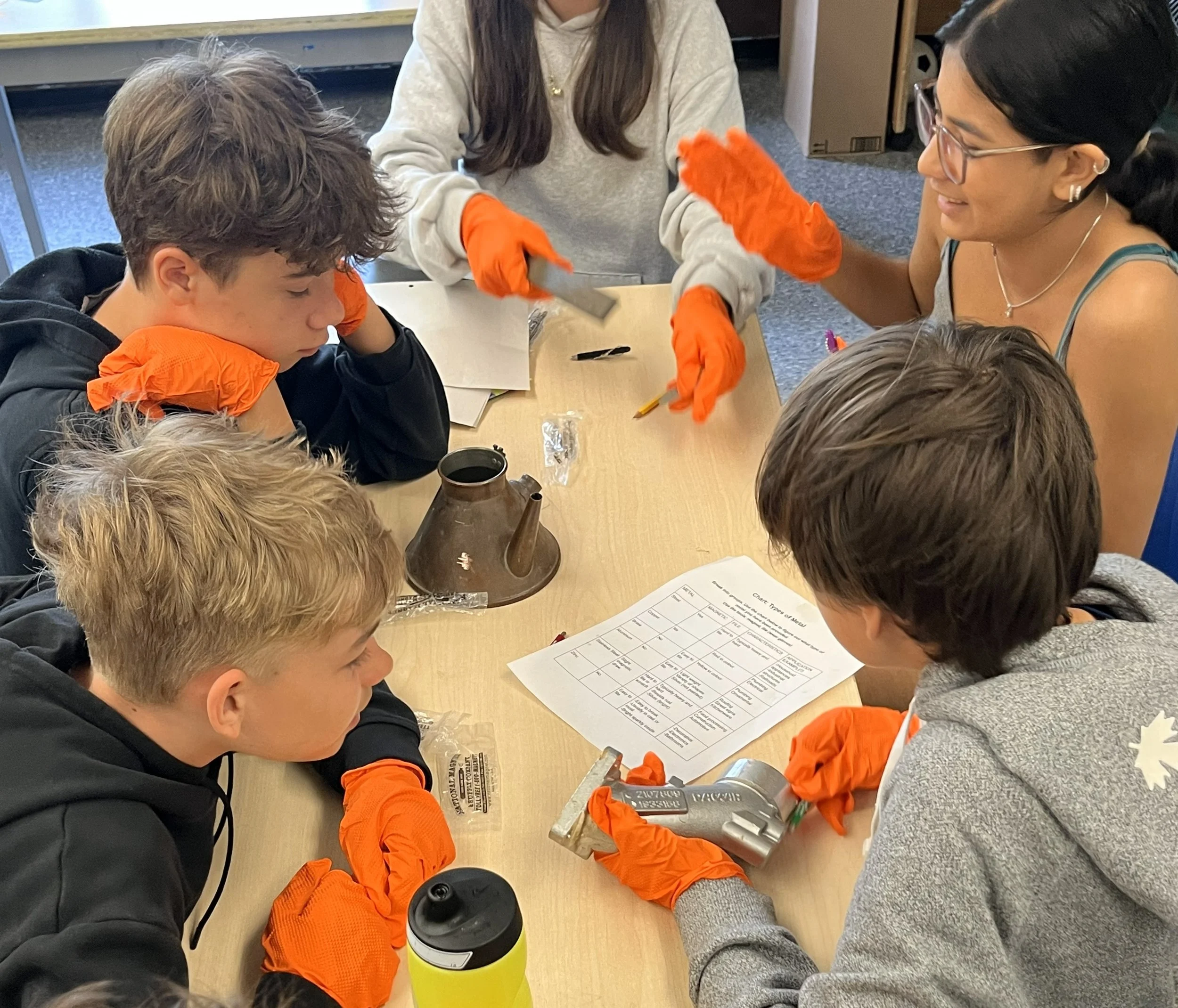
Caption: Grade 7 students learning about different types of metal during Career Day
The grade 7 class was rowdy. They’d been sitting through career day presentations all morning and it was close to lunchtime. I knew from my days as a camp director that the students would not listen to me if all I did was talk. The best way to learn is by doing. I lugged in a big box of assorted metals - a brass faucet, zinc ornament, piece of aluminum siding, copper pipe etc. - dropped it on the teachers desk and began my presentation about my job as a scrap metal dealer.
I’m a fourth generation scrapper. Our business, Canada Iron & Metal, was started by my great grandfather in 1937. He started out as a truck driver and saved enough money to buy a small plot of land in downtown Toronto recycling rags, paper, and metal. We now operate a scrapyard open to the public in the west end of Toronto and buy scrap metal, cars, and electronics from both the public and commercial sector, as well as provide bin services and demolition removal for construction projects across Ontario.
My father always told me that to be in scrap metal “you have to learn your metals!”. The best way to do that is by handling and sorting metals into categories. I wanted these students to learn in the same way so I brought our warehouse to the classroom. Each group was given the main tools used to sort metal - a magnet, and a file. I decided NOT to bring our Niton Analyzer, which tells the exact chemistry of metals, because I knew they would try shooting each other with radioactive rays.
I instructed the students on the properties of each metal. Is it heavy or light? What is it used for? Is it ferrous (magnetic) or non ferrous (non magnetic)? What colour is it? Is it easy or hard to file? Each group used this information to guess the type of metal just like our sorters do at the scrap yard.
The big question I heard from the students was, “What is this metal worth?”. When I told them the price of scrap copper they all gasped in excitement at how much money it could earn.
I remember stressing out in grade 7 about what I was going to be when I grew up. I told the students what I wish I heard: You don’t need to know what you will end up doing. I did all kinds of jobs before I ended up in scrap metal. What matters most is to work hard and learn something from every experience.
I love working in scrap metal because no two days are the same which keeps things interesting. I get to be hands-on with heavy machinery and on my feet in the yard. Beyond the work itself, there’s real satisfaction in knowing our business provides an important service to the community and environment.
The next generation should consider career opportunities in scrap metal and understand the important role of recycling metal for the environment. Every pound of metal recycled is one less pound sent to landfill and one more pound reused instead of mined. Scrap yards like Canada Iron & Metal make that possible—while paying people for the material they bring in.
Ten years from now, I may meet a student who attended my presentation—selling us metal or even working in the industry. If that happens, I’ll smile, knowing it all started with a brass faucet on a teacher’s desk.
Jared Kaminsky is the Operations Manager at Canada Iron & Metal, located at 3534 Dundas St W. in Toronto, ON